
The GoodGirl Ransomware Siege: A Complete 2025 Guide to Decryption, Linux, ESXi, and Storage Recovery
A new and highly adaptive ransomware variant, identified as GoodGirl, has been discovered by security researchers. This malware is particularly dangerous due to its multi-platform capabilities, targeting not only Windows workstations but also critical Linux servers and VMware ESXi hypervisors. This cross-platform threat encrypts files, changes the desktop wallpaper, and appends a unique .goodgir extension.
This guide provides a comprehensive, in-depth playbook for understanding the GoodGirl threat, utilizing our specialized decryptor, and performing advanced recovery operations across all affected systems and storage types.
Latest: Asyl Ransomware Decryption and Recovery (Makop Ransomware Family)
Threat Summary Table
| Attribute | Detail |
|---|---|
| Threat Name | GoodGirl Ransomware |
| Threat Type | Ransomware, Crypto Virus, Files Locker |
| Platform | Windows, Linux, VMware ESXi |
| Encrypted Files Extension | [attacker_email].goodgir |
| Ransom Demanding Message | #Read-for-recovery.txt |
| Free Decryptor Available? | Yes, our specialized GoodGirl Decryptor. |
| Ransom Amount | Varies, typically demanded in cryptocurrency. |
| Cyber Criminal Contact | emilygoodgirl09@gmail.com |
| Detection Names | Avast (Win64:MalwareX-gen [Ransom]), ESET (Win64/Filecoder.Proton.A Trojan), Kaspersky (HEUR:Trojan-Ransom.Win32.Generic), Microsoft (Ransom:Win64/Akira.CCDR!MTB). |
Decoding the Threat: The GoodGirl Ransomware’s Deceptive Playbook
The GoodGirl attackers use a text file named #Read-for-recovery.txt to communicate their demands. The note is concise and direct, focusing on establishing contact and providing instructions to circumvent potential email filtering issues. Its ability to target Linux and ESXi environments elevates it from a standard threat to a critical enterprise risk.
The text presented in the ransom note reads as follows:
Email 1: Emilygoodgirl09@gmail.com
Email 2: Emilygoodgirl09@gmail.com

Send messages to both emails at the same time

So send messages to our emails, check your spam folder every few hours

ID: -

If you do not receive a response from us after 24 hours, create a valid email, for example, gmail,outlook
Then send us a message with a new email
Also read: LURK Ransomware (.lurk) Recovery and Decryption Sojusz Ransomware Family
Indicators of Compromise (IOCs) and Attack Behavior
Recognizing the signs of a GoodGirl infection is the first critical step. The malware’s distinct file-naming convention and its cross-platform reach are its most obvious fingerprints.
Indicators of Compromise (IOCs):
- File Extension: The most obvious indicator is the appended extension in the format
[attacker_email].goodgir(e.g.,1.jpg.[Emilygoodgirl09@gmail.com].goodgir). - Ransom Note File: The presence of a text file named
#Read-for-recovery.txtin directories containing encrypted files. - Desktop Wallpaper: The desktop wallpaper is changed to a ransom demand message.
- Cross-Platform Encryption: Evidence of encryption on both Windows and Linux machines, and on virtual machine files (
.vmdk,.vmx,.vmem) on an ESXi host. - Contact Information: The note provides a specific email address (
emilygoodgirl09@gmail.com) for communication.
Tactics, Techniques, and Procedures (TTPs) with MITRE ATT&CK Framework:
- Initial Access (TA0001): GoodGirl gains entry through common vectors like phishing emails, exploiting unpatched software vulnerabilities, and especially through compromised credentials for remote access services like RDP or SSH.
- Lateral Movement (TA0008): Once inside, the ransomware moves laterally across the network, using stolen credentials or exploits to infect other machines, including critical Linux servers and accessible ESXi hypervisors.
- Impact (TA0040): The primary impact is widespread data encryption across multiple platforms and storage architectures, leading to massive operational disruption and the potential shutdown of entire virtualized environments.
The Recovery Playbook: A Multi-Path Approach to Data Restoration
This core section outlines the primary methods for recovering your GoodGirl encrypted data, with a special focus on our decryptor and advanced recovery scenarios.
Path 1: The Direct Decryption Solution with Our GoodGirl Decryptor
The most direct and safest path to recovery is using our specialized tool, developed to counter the GoodGirl threat across all its targeted platforms.
Our Specialized GoodGirl Decryptor
Our team has developed a specialized decryptor to counter the GoodGirl threat. By leveraging advanced cryptographic analysis and pattern recognition, our tool can often reconstruct the decryption keys without needing to interact with the attackers.
Step-by-Step Guide:
- Step 1: Assess the Infection: Confirm the presence of the
#Read-for-recovery.txtfile, the changed wallpaper, and identify the unique file-naming pattern (.goodgirextension) on Windows, Linux, and ESXi systems. - Step 2: Secure the Environment: Disconnect all infected devices, including servers and ESXi hosts, from the network to halt any further spread.
- Step 3: Submit Files for Analysis: Send a few encrypted samples (under 5MB) and the ransom note file to our team. This allows us to confirm the GoodGirl variant and build an accurate recovery timeline.
- Step 4: Run the GoodGirl Decryptor: Launch the tool with administrative privileges (
sudoon Linux, “Run as Administrator” on Windows, or via SSH on ESXi). The decryptor connects securely to our servers to analyze encryption markers and file headers. - Step 5: Enter the Victim ID: The unique ID provided in the ransom note is required to generate a customized decryption profile.
- Step 6: Automated File Restoration: Once initiated, the decryptor verifies file integrity and restores data automatically, preserving original filenames and directory structures.
Also read: The VER_TU Ransomware Attack: A Complete 2025 Guide to Recovery and Eradication
Public Decryption Tools and Repositories
If our tool is not applicable, several public initiatives are invaluable. Always identify the ransomware strain before using any tool, as running the wrong decryptor can cause permanent damage.
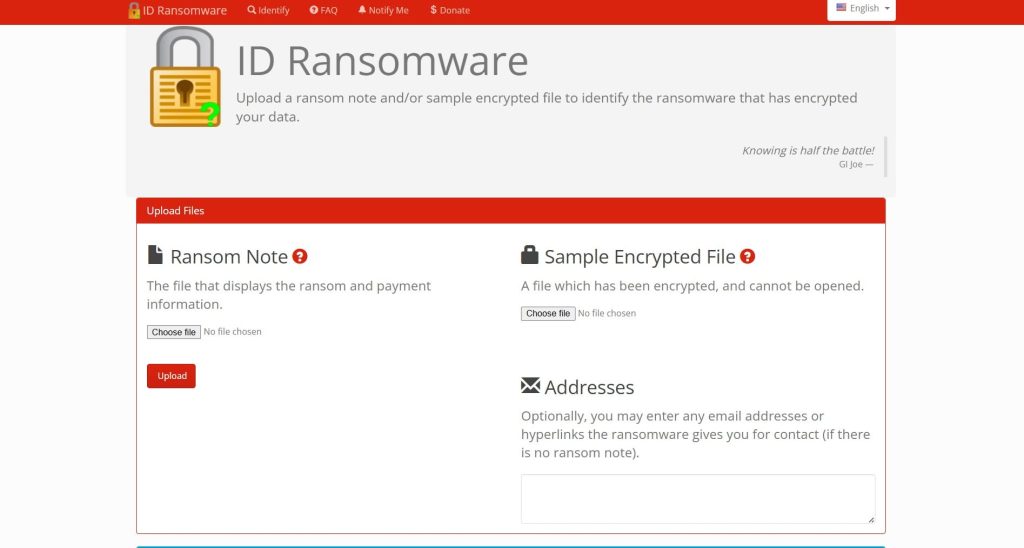
- ID Ransomware Service: Use the free ID Ransomware service to upload the ransom note and a sample encrypted file. Find it at ID Ransomware.
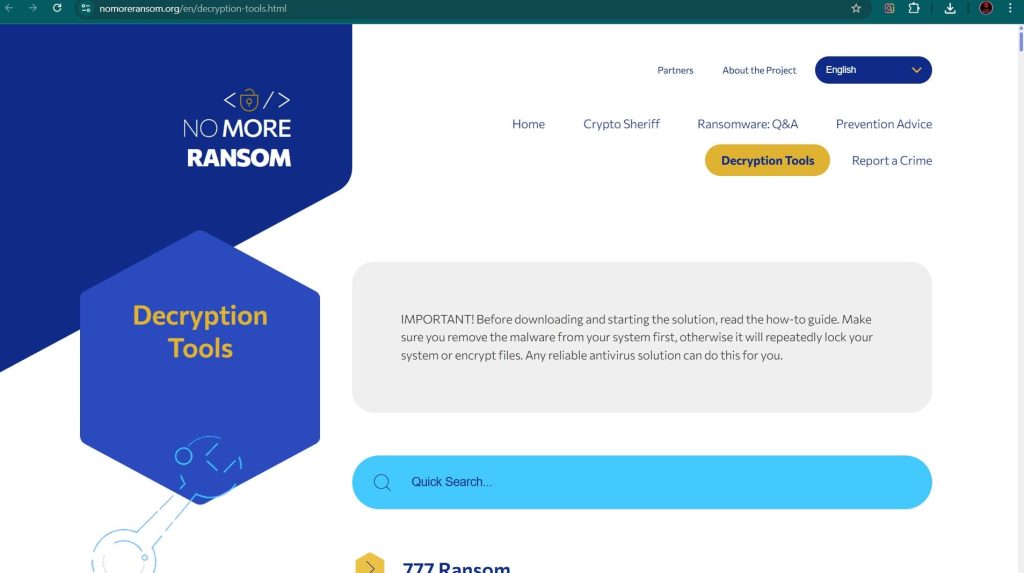
- The No More Ransom Project: This is the most important resource, providing a centralized repository of free decryption tools. Find it at The No More Ransom Project.
- Major Security Vendor Decryptors: Check the websites of Emsisoft, Kaspersky, Avast, and Trend Micro for available tools.
In-Depth Recovery Scenarios
Path 2: Advanced Linux System Recovery
When a Linux server is hit by GoodGirl, recovery requires a different set of tools and knowledge.
Linux-Specific Backup and Recovery
- Btrfs/ZFS Snapshots: If your file system is Btrfs or ZFS, you may have snapshots enabled. These are point-in-time, read-only copies of your file system that can be used to revert data to a state just minutes before the attack.
- Rsync and Tar: If you have recent
rsyncbackups ortararchives, you can restore from them. - Enterprise-Grade Backups (Veeam): Veeam provides robust protection for Linux environments, including support for agent-based backups. It can create immutable backups that cannot be altered by the ransomware. Learn more at the official Veeam website.
Last Resort: Linux Data Recovery Software
- TestDisk & PhotoRec: These are powerful, free, and open-source data recovery utilities for Linux. TestDisk can recover lost partitions, while PhotoRec is designed to recover specific file types. You can find them on the CGSecurity website.
- Foremost: Another console-based file recovery program that can recover files based on their headers and footers.
Important Procedure: For the best chance of success, you should shut down the affected server, remove its hard drive, and attach it as a secondary drive to a separate, clean Linux machine.
Path 3: VMware ESXi Hypervisor Recovery
An attack on an ESXi host is a critical business continuity event. GoodGirl encrypts the virtual machine files, effectively taking all hosted VMs offline.
ESXi-Specific Backup and Recovery
- VMware vSphere Data Protection: If you were using a dedicated backup solution for vSphere, this is your primary recovery path. These solutions take image-level backups of VMs that can be restored to a new, clean host.
- Veeam Backup & Replication for VMware: Veeam is a market leader in this space, offering powerful, agentless backup of VMs with features like instant recovery and immutable backups. This is the gold standard for protecting virtualized environments.
- Restoring from Snapshots: If you took snapshots of your VMs before the attack, you can revert to them. However, be aware that GoodGirl may have deleted or corrupted these snapshots.
Last Resort: ESXi File Recovery
- Using a Linux Live CD: You can boot the ESXi host with a Linux live environment, mount the VMFS datastore (where the VM files are stored), and then use Linux data recovery tools like
PhotoRecto attempt to carve out unencrypted files from the encrypted.vmdkvirtual disks. This is a highly complex and low-probability operation. - Do Not Pay the Ransom: ESXi ransomware attacks are notoriously unreliable. Even after payment, attackers often fail to provide a working decryptor, or the decryptor itself may corrupt the VM files, making them unbootable.
Path 4: Specialized Network Storage Recovery (NAS, SAN, DAS)
GoodGirl’s cross-platform nature means it is fully capable of targeting network storage, making recovery more complex. The approach depends on the storage architecture.
NAS (Network-Attached Storage) Recovery
NAS devices (e.g., Synology, QNAP) are prime targets because they are often less secured and contain vast amounts of data.
- Leverage Built-in Features: The most effective method for NAS devices is Snapshots. Brands like Synology and QNAP have a snapshot feature that takes point-in-time, read-only copies of your data. These snapshots are often invisible to ransomware and can be used to revert shared folders to a state just minutes before the attack.
- Cloud Sync Versioning: If your NAS was configured to sync files to a cloud service like Google Drive, Dropbox, or OneDrive, you may be able to use the version history features of those services to restore your files to an unencrypted state.
- Public Decryption Tools: You may be able to mount the NAS volumes as a drive on a clean PC and run our GoodGirl decryptor directly on them.
SAN (Storage Area Network) Recovery
SANs provide block-level storage to servers. Recovery happens at the server level, but the SAN itself offers powerful protection.
- Storage Array Snapshots: Enterprise SANs (from vendors like Dell EMC, NetApp, HPE) have robust snapshot and cloning capabilities. These are the most effective way to recover entire LUNs (Logical Unit Numbers) to a point-in-time before the attack.
- LUN Masking and Isolation: Immediately isolate the infected servers from the SAN by using LUN masking in the SAN management console to prevent the ransomware from encrypting more volumes.
DAS (Direct-Attached Storage) Recovery
DAS is storage directly connected to a single server (e.g., via SAS, USB, or internal drives). The recovery process is identical to recovering from the server’s local drives.
- Server-Level Backups: Recovery depends entirely on the backup strategy for the server to which the DAS is attached.
- Data Recovery Software: If no backups exist, you must treat the DAS drives as you would any other hard drive: remove them, connect them to a clean system, and run data recovery software like TestDisk or PhotoRec.
Essential Incident Response and Prevention
A full response includes containment, eradication, and future prevention.
Containment and Eradication
- Isolate All Systems: Immediately disconnect all infected machines, including servers, ESXi hosts, and storage appliances, from the network.
- Remove the Malware: Use a reputable antivirus or anti-malware program to scan for and remove the ransomware executable on all affected systems.
- Change All Credentials: Assume that credentials have been compromised and change passwords for all user accounts, administrators, and service accounts across the entire network, including ESXi and vCenter.
Hardening Your Defenses with Modern Protection
- Endpoint Protection Platforms (EPP/EDR): Solutions like SentinelOne Singularity™ Endpoint and CrowdStrike Falcon focus on preventing ransomware by identifying and neutralizing threats using behavioral AI.
- Network Segmentation: Segment your network to prevent lateral movement. Ensure that critical storage systems and ESXi management interfaces are not accessible from general-purpose user workstations.
- The 3-2-1 Backup Rule: Maintain at least three copies of your data, on two different types of media, with one copy stored off-site or in the cloud. Test your backups regularly.
- Secure Storage and Virtualization Management: Change default passwords on all NAS, SAN, and ESXi management interfaces. Enable snapshot features and ensure they are configured with a retention policy that meets your recovery point objectives (RPO).
Post-Recovery: Securing Your Environment and Ensuring Resilience
This critical phase begins after your files have been restored.
- Step 1: Verify Data Integrity and Completeness: Check restored files for corruption and completeness.
- Step 2: Conduct a Full System Scan: Run a full, deep scan of your entire environment using a reputable antivirus or anti-malware solution.
- Step 3: Fortify All Credentials: Change all user, admin, service, and cloud passwords. Enforce the use of strong, unique passwords for every account.
- Step 4: Patch and Update Everything: Update the OS and all third-party applications on all systems to close security holes.
- Step 5: Reconnect to the Network Cautiously: Monitor for unusual activity upon reconnection.
- Step 6: Implement or Strengthen a 3-2-1 Backup Strategy: Create or improve a robust backup system and test it regularly.
- Step 7: Perform a Post-Incident Analysis: Review how the attack happened. Use this knowledge to improve user training and security policies.
Reporting Obligations
Report the incident to help combat cybercrime and fulfill potential legal obligations.
- Report to Law Enforcement: In the US, file a complaint with the FBI’s IC3. In the UK, report to Action Fraud.
- Report to CISA: The U.S. Cybersecurity & Infrastructure Security Agency (CISA) urges reporting via its portal.
Conclusion
The GoodGirl ransomware represents a significant and sophisticated threat due to its strong encryption, manipulative ransom note, and dangerous ability to cripple entire storage and virtualized infrastructures. However, like all ransomware, it can be defeated with a calm, methodical, and prepared response.
The path to resilience begins with a multi-layered security posture that combines advanced endpoint protection, robust network segmentation, and a disciplined 3-2-1 backup strategy that includes immutable snapshots for both servers and network storage devices.
Paying the ransom only fuels the criminal ecosystem and offers no guarantee of a positive outcome. By understanding the tactics of threats like GoodGirl and preparing accordingly, you can transform a potential catastrophe into a manageable incident, ensuring that your data—and your peace of mind—remain secure.
Frequently Asked Questions (FAQ)
Contact Us To Purchase The GoodGirl Decryptor Tool


One Comment