This article explains the .ZuI7Kx3T3 incident (a LockBit 3.0 / “Black” style sample), covers immediate containment and preservation steps, summarizes decryption and recovery options (free, paid, and specialist), lists IOCs and TTPs, and provides mitigation and hardening guidance. Key case facts are drawn from the victim report and public LockBit 3.0 analyses.
A Windows 10 system was reported encrypted with files bearing the extension .ZuI7Kx3T3, and a matching ransom note named ZuI7Kx3T3.README.txt. The victim supplied the ransom note hash (SHA-256: 62C87E58EAA614BCDB906D2CC0AB7DDD26A885C1502D51AE8D5AA2A85DC3F2A4) and samples; ID-Ransomware produced an undetermined result. Forum responders identified the sample as belonging to the LockBit 3.0 (“Black”) family — LockBit 3.0 commonly uses a random 9-character token as the file extension and as the ransom-note prefix.
How LockBit 3.0 / “Black” (and .ZuI7Kx3T3) works — quick technical overview
Random 9-char extension scheme: Instead of a fixed .lockbit extension, many LockBit 3.0 builds append a random 9-character alphanumeric string to encrypted files and name the ransom note using that same token (e.g., ZuI7Kx3T3.README.txt). This exact pattern is why the victim sample lines up with LockBit 3.0.
Double extortion model: LockBit variants often combine encryption with exfiltration and a threat to publish stolen data if victims do not pay.
Hybrid crypto: Common LockBit variants use symmetric file encryption for speed (e.g., ChaCha or AES) and asymmetric crypto (RSA) to protect the symmetric keys — meaning the private RSA key is required to recover files unless keys are leaked or flawed implementations are present. In many LockBit 3.0 cases the attackers require a private RSA key for decryption.
Pre-encryption sabotage: Typical behavior includes deletion of Volume Shadow Copies and other recovery artifacts (e.g., vssadmin delete shadows /all /quiet) to prevent easy restoration.
Distribution: Affiliates commonly gain initial access via compromised VPN/RDP credentials, phishing, exploitation of unpatched appliances, or purchased access. Lateral movement uses legitimate admin tools, PSExec/GPO, and remote scripting.
Immediate steps after discovering .ZuI7Kx3T3 encryption
Isolate affected hosts (physically or by network segmentation) — disconnect from the network to limit lateral spread (do not simply log off; pull network or switch ports if possible).
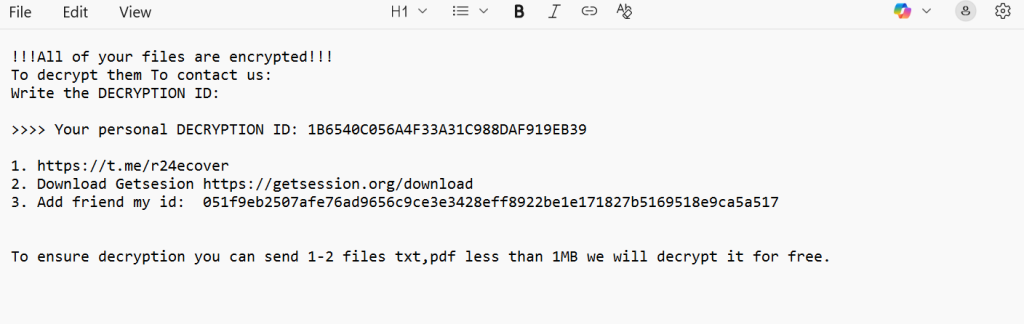
Preserve evidence — keep the ransom note intact, preserve encrypted & original files (if present), collect system images, event logs, registry hives, and any suspicious binaries. Do not run untrusted decryptors from forums.
Document everything — ransom note content (copy the text), timestamps, infected file names/extensions, and hashes. Record any suspicious outbound connections.
Do not reboot or reformat unless instructed by forensic examiners — some memory artifacts or keys may be present until shutdown.
Notify legal counsel, cyber insurance, and law enforcement (IC3 / national CERT), and consider engaging a professional incident response team. Operation Cronos demonstrates law-enforcement successes in the LockBit ecosystem; report your case so any seized keys can be checked against your victim ID.
Decryption and recovery options (what works and when)
Below are the major recovery avenues and their pros/cons for a LockBit 3.0 / .ZuI7Kx3T3 situation.
Free methods
1. Backups (recommended if available)
If you have verified, uncompromised offline/off-site backups, this is the fastest and safest approach. Validate integrity before restoring. Use immutable or WORM snapshots where possible.
2. Official decryptors / law-enforcement keys
Some keys recovered by law enforcement after takedowns (e.g., Operation Cronos) have enabled decryption for certain victims. Check national CERT/law-enforcement bulletins and NoMoreRansom resources to see if your victim ID is covered.
3. File-type recovery (limited)
For some file types, partial recovery tools (file carving, shadow copy recovery if not deleted) can restore fragments; this is a stopgap and not a decryption of LockBit keys.
Specialist research tools
Forensic key extraction / crypto flaws: Occasionally security researchers or vendors find implementation flaws that allow recovery without paying. This is rare and case-specific. Provide the encryptor binary and ransom note text to trusted responders for analysis.
GPU-accelerated brute force tools: For some ransomware families that used weak seeds or timestamp-based keys, GPU brute force projects have succeeded — but LockBit 3.0 typically uses strong hybrid crypto, making brute force infeasible in practice.
Paid options
Paying the ransom
Paying can sometimes yield a decryptor, but it carries legal, ethical, and reliability risks (the attacker might not provide a working key, deliver additional malware, or extort further). Many authorities and vendors discourage payment unless assessed and approved by legal counsel and risk managers.
If negotiation is considered, use a vetted incident response/negotiation firm to manage communications and request proof-of-decryption for sample files before payment.
Third-party negotiators / recovery vendors
Specialized firms can attempt negotiation, validate attacker keys, and perform decryption in controlled environments. Fees are typically high and outcomes vary.
How to Use Our LockBit 3.0 (.ZuI7Kx3T3) Decryptor ?
Step 1 – Prepare
Save the ransom note ZuI7Kx3T3.README.txt (do not edit).
Collect several encrypted samples (*.ZuI7Kx3T3).
Ensure admin privileges and an internet connection.
Step 2 – Run
Run LockBit3_Decrypter.exe as Administrator.
Let it scan drives for .ZuI7Kx3T3 files.
Step 3 – Import Note
Click Import Note, select ZuI7Kx3T3.README.txt.
Tool extracts Victim ID and checks the key server.
Step 4 – Verify
Review scan summary (file count, integrity).
Confirm and click Start Decryption.
Step 5 – Validate
Open multiple recovered files to confirm.
Save the decryption log.
Step 6 – Cleanup
Disconnect from network, clean/rebuild infected hosts, rotate credentials, restore backups.
Incident playbooks & tabletop exercises — include ransomware response plans, legal escalation, and cyber-insurance processes.
Timeline & attribution notes
Victim first observed .ZuI7Kx3T3 on 2025-09-25 and posted artifacts to a security forum for triage. Forum responders identified it as LockBit 3.0 / Black.
Attribution to LockBit 3.0 here is strong because of the 9-char extension + matching README file name — a hallmark of LockBit Black builds and affiliates. Still, builder leaks and affiliate customization mean exact attribution to a single actor is sometimes ambiguous.
Recommended next steps for the victim / SOC
Image the affected drives and preserve a forensics copy (air-gapped).
Share the ransom note text and hashes securely with your IR vendor/law enforcement.
Search your network for other hosts with files matching \.[A-Za-z0-9]{9} and notes [A-Za-z0-9]{9}.README.txt.
Collect outbound logs (proxy, firewall) for suspicious uploads (Rclone/MEGA) or TOR gateway usage.
Engage a vetted IR firm experienced with LockBit/Double-extortion incidents.
Check official channels (NoMoreRansom, national CERT notices) for any key disclosures relevant to your victim ID.
Conclusion
The .ZuI7Kx3T3 incident aligns strongly with the LockBit 3.0 / Black ransomware family (the random 9-character extension + matching README is a clear fingerprint). Recovery without the attacker’s private key is unlikely in many LockBit 3.0 cases — but immediate containment, evidence preservation, and engagement with law enforcement / trusted response firms are the right first moves. Check official seized-key databases and coordinate with CERT/law-enforcement while preserving artifacts for forensic and potential key-matching processes.
Frequently Asked Questions
Not in general. LockBit 3.0 variants typically require the attacker’s private RSA key. Check law enforcement/NoMoreRansom notices — some victims’ keys were recovered in previous takedowns, but a universal free decryptor does not exist.
The ransom note often contains the victim ID needed to match a key. If law enforcement recovered a key that matches your victim ID, that can enable free decryption. Preserve the note and provide it to responders.
Payment is risky and not recommended without legal and risk review. Attackers may not provide working keys and could extort further. Engage professional negotiators and law enforcement before considering payment.
Encrypted file samples (hashes), the ransom note (text & hash), memory image (if safe), event logs, firewall/IDS logs, and any suspicious binaries. Do not alter infected disks.
If shadow copies were deleted, recovery is difficult. Forensic snapshots or backups may still exist offsite. Sometimes backup vendors keep immutable copies unaffected by on-premise deletions. Validate your backup providers.
Report to local law enforcement / national CERT and ask whether the victim ID appears in any published key lists or decryptor feeds (e.g., NoMoreRansom or official notices from agencies involved in LockBit disruptions).
Treat it as likely related — LockBit affiliates often use the same 9-char token per incident. Hunt for notes named [token].README.txt and check for matching icons/wallpaper files.
Contact Us To Purchase The Zul7Kx3T3 Decryptor Tool
Overview SAGA 2.2 ransomware has surfaced as a formidable player in the realm of cybersecurity threats. By infiltrating systems, encrypting critical files, and demanding payments for decryption keys, it has left individuals and organizations scrambling to recover their data. As these attacks grow more frequent and sophisticated, the challenge of mitigating their impact becomes more…
Overview: Confronting the RedFox Ransomware Threat RedFox ransomware has emerged as a formidable adversary in the cybersecurity landscape, infiltrating systems, encrypting critical data, and demanding hefty ransoms. Its growing sophistication and reach have made data recovery increasingly complex for individuals and enterprises alike. This in-depth guide unpacks the nature of RedFox ransomware and explores various…
Background on the Threat A new variant of the Proton/Shinra ransomware family, identified as Shinra v3, has been observed in the wild, encrypting files and appending the extension .gwlGZaKg. This version continues the group’s pattern of generating random extensions, making identification difficult for victims. It delivers ransom notes such as HELPME.txt or _HowToRecover.txt, demanding communication…
IronChain is a ransomware strain belonging to the Win32/Ransom.IronChain family that encrypts user data on both Win32 and Win64 platforms. This malware targets a wide array of critical data, transforming standard office documents such as report.docx.ironchain and financials.xlsx.ironchain into inaccessible formats. Furthermore, the attack vector aggressively pursues high-value infrastructure and database files, appending extensions to…
Our Mimic Ransomware Recovery: Rapid Decryption, Expert‑EngineeredOur team reverse‑engineered Mimic’s encryption mechanism—rooted in the leaked Conti builder—and created a decryptor used by security professionals globally. Compatible with Windows, Linux, and VMware ESXi, our decryptor combines reliability and precision for safe file restoration. Related article: How to Decrypt .BLK, .DEV, and .Darkness Files from Darkness Ransomware…
In our recovery lab today at Lockbit Decryptor, we isolated a ransomware strain using the .backmyfiles@tuta.com.backmyfiles extension. Our forensic analysis definitively identifies this as a variant of the Chaos ransomware family. This strain employs a stream cipher for encryption but suffers from a critical operational flaw: in many instances, it fails to complete the encryption…



One Comment